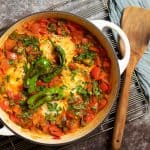
Shakshuka with Blistered Shishito Peppers
A classic Moroccan breakfast stew flavored with warm spices and topped with jammy poached eggs. Blistered shishito peppers add a little something extra!
Servings: 4
Ingredients
- 1 tablespoon olive oil
- 12-16 shishito peppers
- 2 tablespoons olive oil
- 1 medium onion
- 1 red bell pepper
- 3 cloves garlic
- 2 teaspoons sweet paprika
- 1 teaspoon ground cumin
- 1 teaspoon ground coriander
- ¼ teaspoon ground pepper (I use white pepper, black is fine)
- 1 pinch red pepper flakes or to taste
- 6 cups fresh tomatoes (or 1 28-ounce can diced tomatoes)
- ½ teaspoon salt plus more to taste (if using canned tomatoes, start with ¼ teaspoon)
- 4 large eggs
- 4 slices crusty whole grain bread
- 2 tablespoons chopped fresh cilantro and/or parsley for garnish
Instructions
Prep your ingredients:
- Take your eggs out of the refrigerator and leave them on the counter to come to room temperature. Chop the onion, bell pepper, tomatoes, and mince the garlic.1 medium onion, 1 red bell pepper, 6 cups fresh tomatoes, 3 cloves garlic
- Measure out the paprika, cumin, coriander, and black and red pepper into a small bowl. Set aside.2 teaspoons sweet paprika, 1 teaspoon ground cumin, 1 teaspoon ground coriander, ¼ teaspoon ground pepper, 1 pinch red pepper flakes
- Wash the shishito peppers and dry them well. They must be DRY. Toss them in a bowl with 1 tablespoon of olive oil.12-16 shishito peppers, 1 tablespoon olive oil
- Heat a cast iron skillet over medium heat until a drop of water sizzles and evaporates immediately. Add the shishito peppers in a single layer and cook 3-4 minutes, or until blistered. Turn the peppers over and cook an additional 3-4 minutes until blistered on the other side.
- Remove the peppers to the bowl you tossed them in. When they are cool enough to handle, chop them roughly and remove the stems (you can set a few whole ones aside for garnish if you would like). Set aside.
Cook the stew:
- Heat 2 tablespoons of olive oil in your saute pan or skillet over medium heat. I don’t recommend using your cast iron pan since the acid in the tomatoes will affect the seasoning.2 tablespoons olive oil
- Add the onion and bell pepper and saute until the onions are translucent. Add the garlic and saute one minute more.
- Add the spices you measured out earlier and stir into the onions and peppers until fragrant, about 30 seconds.
- Add the tomatoes and salt and stir to combine. Bring to a moderate simmer, stirring frequently. Simmer for 10 minutes, stirring occasionally. Turn down the heat as needed to maintain a moderate simmer.½ teaspoon salt
- Taste the shakshuka and if it tastes bland, add ¼ teaspoon of kosher salt. Stir it in very well, then taste again. If it is still bland, add salt by the pinch, stir, and taste again, repeating until the stew tastes seasoned but not salty.
- Stir in the chopped shishito peppers and simmer for 5 more minutes, or until most of the liquid has cooked off from the stew and it begins to thicken.
Add the eggs:
- Use your spoon or spatula to create six shallow wells in the shakshuka. Gently crack an egg into a small glass or metal bowl, then use the bowl to gently place the egg into one of the wells. Repeat with the other eggs.4 large eggs
- Set the heat to medium low and cover the skillet. Cook until the egg whites are set, 6 to 9 minutes.
Toast the bread:
- While the eggs are cooking, toast your bread slices and then brush them generously with olive oil.4 slices crusty whole grain bread
Garnish and serve:
- Top the shakshuka with chopped herbs and serve with the bread.2 tablespoons chopped fresh cilantro and/or parsley for garnish
Notes
- Use a larger skillet for more servings. A 10-inch skillet can handle 4-5 eggs, a 12 inch skillet is better for 6-8 eggs. I use multiple skillets for more than that
- If using canned tomatoes, use the very best tomatoes you can find and afford. If you can find imported san marzano tomatoes, these are generally preferable. I like Cento, Mutti, and Strianese (the Strianese are VERY hard to find, but they are my absolute favorite). Muir Glen Organic are my favorite domestic brand, I buy them on sale whenever I can.
- The sodium content of canned tomatoes varies dramatically, so start with half the recommended amount of salt. You can season aggressively from there if your tomatoes aren’t very salty, but this gives you more control over the finished product.
- If your tomatoes are too acidic, add ½ teaspoon baking soda to neutralize the acid.
Nutrition
Calories: 322.3kcal | Carbohydrates: 32.6g | Protein: 12.5g | Fat: 16.9g | Saturated Fat: 3.1g | Polyunsaturated Fat: 2.6g | Monounsaturated Fat: 10.2g | Trans Fat: 0.02g | Cholesterol: 163.7mg | Sodium: 976.8mg | Potassium: 804.4mg | Fiber: 9.4g | Sugar: 8.4g | Vitamin A: 7132.3IU | Vitamin C: 117.2mg | Calcium: 240.9mg | Iron: 7.1mg
