Roasted Sweet or Hot Peppers
Roasted peppers are a delicious and flavorful staple in kitchens throughout the world.
Equipment
- Gas range or oven broiler
- Tongs
- Knife and cutting board
Materials
- Fresh sweet bell peppers or chile peppers
- Extra virgin olive oil (for refrigeration or freezing) See notes for substitutions
Instructions
Gas stovetop-roasted peppers
- (Optional) Cover the area under your burner with foil.
- Replace the burner grate and turn the burner on medium-high.
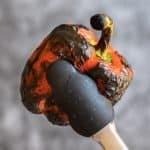
- Use tongs to place a pepper directly on the burner grate so that the tips of the flame make contact with the pepper. Allow to cook until the spots in contact with the flame have charred.

- Turn the pepper several times so that the entire surface spends time in contact with the flame and becomes black and blistered.
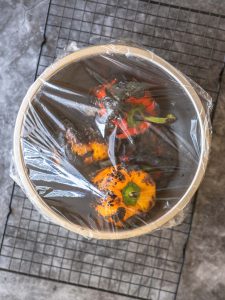
- Once the pepper has softened and the entire outside is charred (8-10 minutes), remove it to a bowl and cover with a lid, an inverted plate, or plastic wrap. Let sit for 10-15 minutes to sweat before proceeding.
- Use your hands to remove and discard the tops, seeds, membranes and skins from the flesh of your peppers.

Oven broiler-roasted peppers
- Move the top rack in your oven to the highest position and turn on the broiler to high.
- Wearing gloves, cut the tops off of your peppers (if desired) and cut them lengthwise in half. Remove the seeds and membranes of chile peppers if you prefer a mild roasted pepper.
- Place the pepper halves flesh-side down on a metal baking sheet lined with foil. Position the peppers so they will be in close proximity to the flame of your gas broiler or the element of your electric broiler.
- Broil your peppers for 10-15 minutes, checking every 3-4 minutes and moving the pan around to ensure all of the peppers get time in close proximity to the broiler. I sometimes also have to move the peppers around on the pan with a pair of tongs.

- When the chiles are soft and the skin is charred all over, remove them to a bowl and cover with a lid, an inverted plate, or plastic wrap. Let sit for 10-15 minutes to sweat before proceeding.
- Peel off and discard the charred skin from the flesh of your peppers.

Roasted pepper storage: Refrigerator
- Add your peppers to a jar or a container with an airtight lid and store in the refrigerator for up to a week.
- To make your peppers last up to two weeks, add 1-2 tablespoons of extra virgin olive oil to the container.

Roasted pepper storage: Freezer
- If desired, cut your roasted peppers into strips. Chiles can be diced or left whole.
- Fold peppers or chiles into the compartments of an ice cube tray.
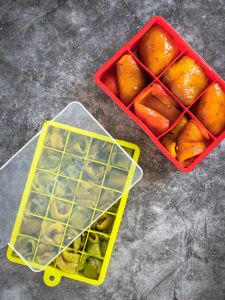
- Add extra virgin olive oil to cover the peppers or chiles, and cover your ice cube tray with a lid or plastic wrap.
- Place the ice cube trays in your freezer for 12-24 hours.
- Once the peppers and oil are frozen, pop them out of the ice cube trays and store them in a Ziploc bag or a silicone freezer storage bag. Be sure to add a label with the date!
- Frozen peppers will defrost overnight in the refrigerator, or within an hour or so on your kitchen counter. Only defrost on the counter if you plan to use your peppers right away.
- To defrost peppers in 10-15 minutes, place them in a small Ziploc bag, press out the air and seal, then place the bag in a bowl of warm water.
Notes
Roasted peppers or chiles stored in an airtight container in the refrigerator should last up to a week. Discard them at the first sign of spoilage, such as an unpleasant odor or visible mold anywhere in the jar.
Frozen roasted peppers or chiles will last about three months in the freezer. They won't spoil after that, but their flavor and texture begin to deteriorate.
Avocado oil or organic cold-pressed canola oil are also healthy choices for freezing or storing your peppers.
