

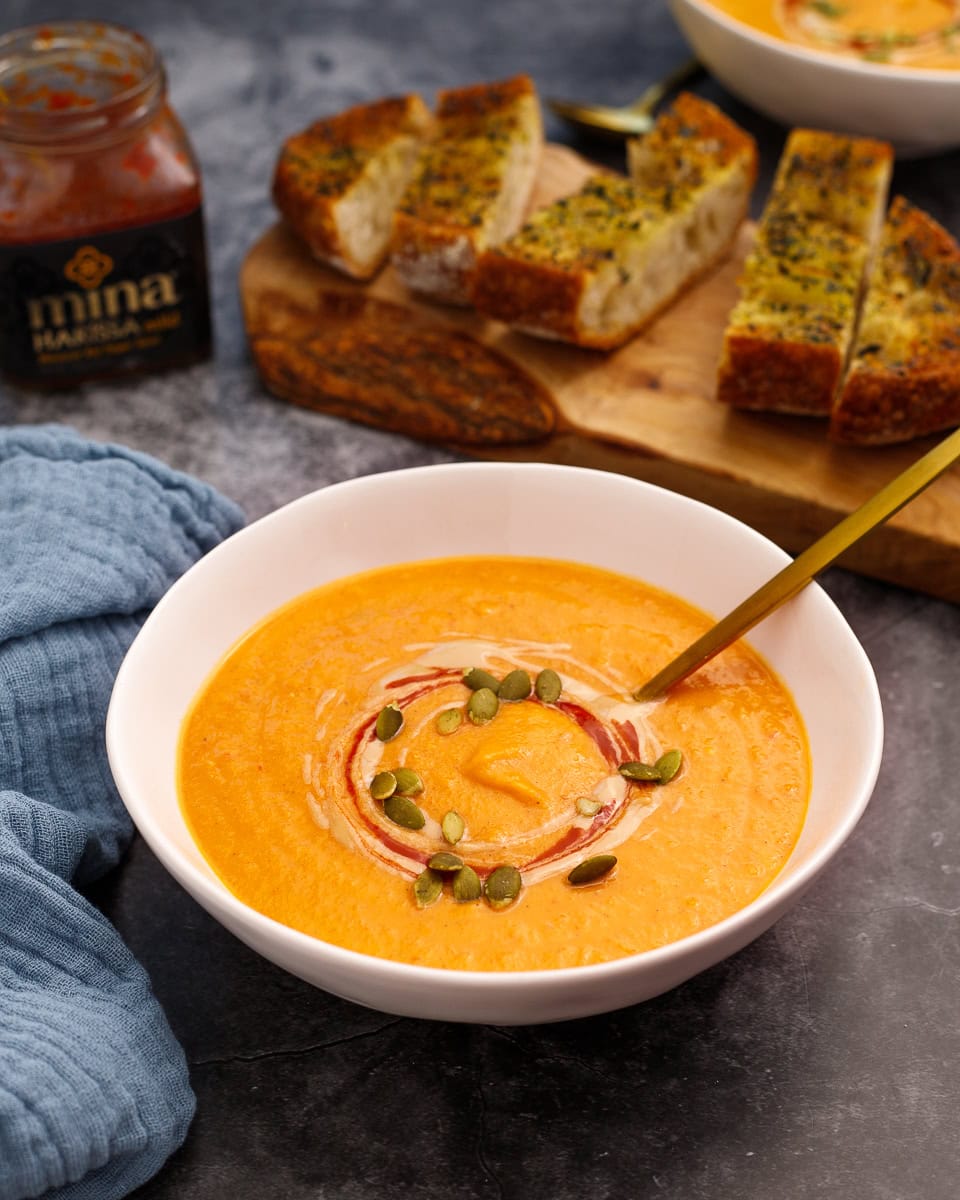
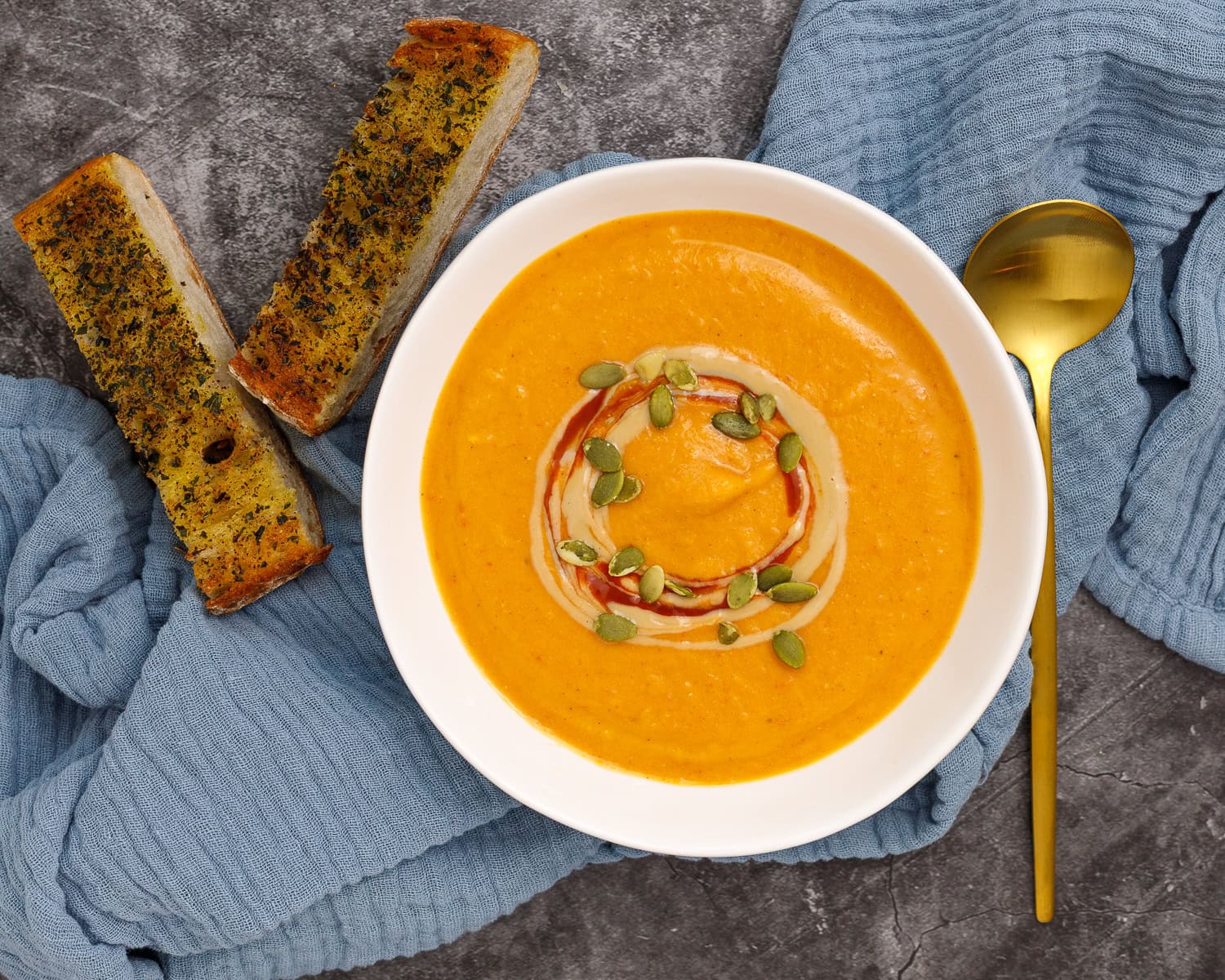
This roasted butternut squash and red pepper soup isn't the one you grew up with. Smoky harissa and nutty tahini replace the usual dairy and nutmeg, turning it into a lightly spicy butternut squash soup that trends savory rather than sweet.
Recipe highlights ✨
• Simple instructions. The oven does most of the work while the squash and peppers caramelize; then a short simmer and an immersion blender bring it together without fuss.
• Built on real nutrition. The squash and peppers add fiber and plenty of vitamins; the tahini and olive oil add healthy fat and flavor.
• No cream, no coconut milk. Tahini gives the soup its rich, creamy texture instead. It's naturally dairy-free, without losing any of the richness.
Most butternut squash soup leans sweet. And there's nothing wrong with that, but it can get a bit repetitive. I'm always looking for a new take on a classic, so I took this butternut squash and red pepper soup in a savory, nutty direction instead.
In this version, harissa adds a rich smokiness and a pleasant moderate heat, while tahini makes the soup creamy, rich, and just a bit nutty. Roasted red peppers add dimension and make this soup a comforting bowl of richness and zing you'll be making all fall and winter.
Harissa paste adds smoke, moderate spice
Harissa is a chili paste associated with Tunisia, and it gives this soup an assertive North African flair. It's made from roasted or rehydrated chilies, garlic, and warm spices like caraway, coriander, and cumin, usually loosened with olive oil.
The flavor profile is smoky and spicy up front, with an underlying earthiness from the toasted spices. It also has a pleasant tang that helps balance the sweetness of the roasted butternut squash and red peppers and the nuttiness of Middle Eastern tahini.
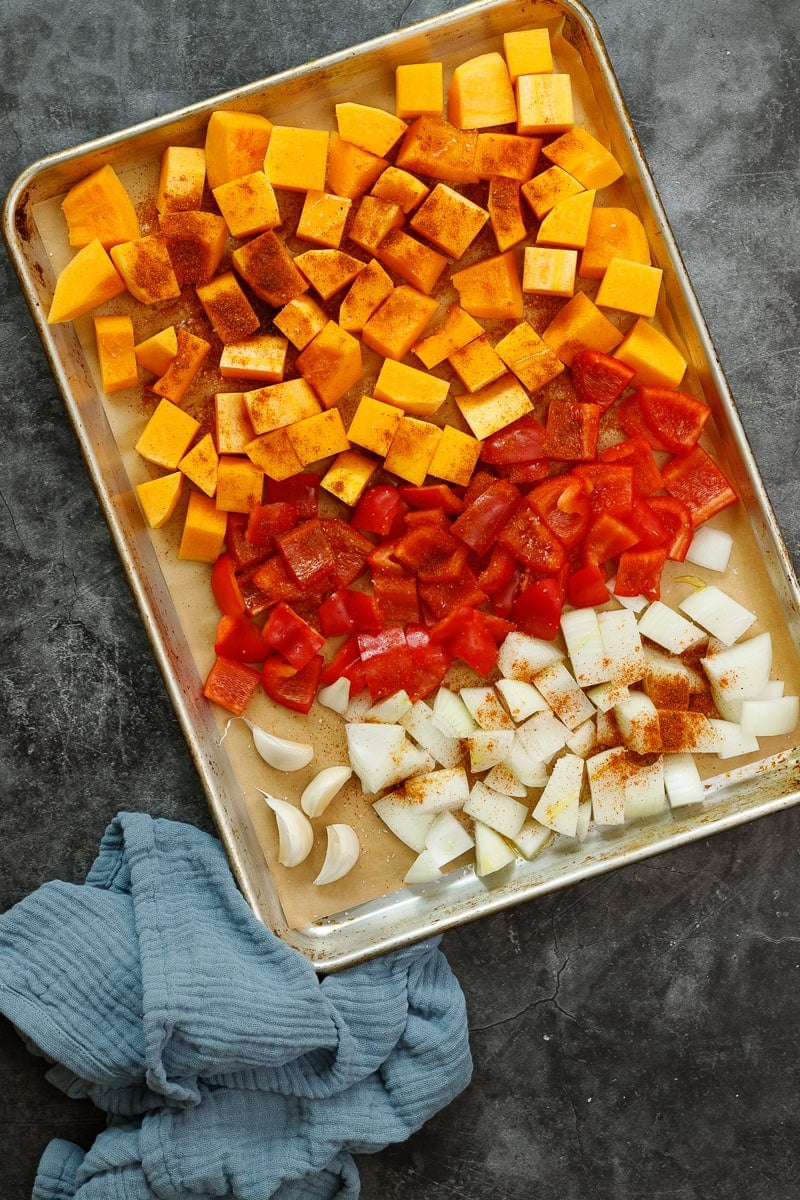
You'll also see harissa sold as a dry seasoning blend. The seasoning mix is a modern convenience product rather than a traditional one, but it's useful here: a dry blend clings to vegetables and toasts in the oven in a way a wet paste doesn't do as well, making it a good choice for roasting.
I developed this recipe using both the paste and the seasoning, but it can also be made with just the harissa paste. See the recipe notes for adjustments.
A note on brands: I generally use mild harissa from Mina. They also make a hot version, and I like spicy food, but the hot one is...HOT. The mild version gives you all of the smoke and flavor, with heat that stays in the background where it belongs in this soup.
What to serve with butternut squash & red pepper soup
This soup is vegetable-forward and on the lighter side, so I recommend serving it with something that has protein to boost the staying power of your meal.
Hummus toast. Thick-cut whole grain bread, toasted, spread with hummus, then finished with a squeeze of lemon and a sprinkle of paprika, sumac, or za'atar.
Falafel and pita. Trader Joe's sells a frozen falafel that works great here. I serve it in a whole-wheat pita with lettuce, tomato, and a spoonful of plain Greek yogurt.
Mediterranean chopped salad with chickpeas and feta. My Mediterranean chopped salad is a good base here. Add a can of drained chickpeas and crumbled feta, and it makes a full "soup-and-salad" style meal.
Ingredient notes
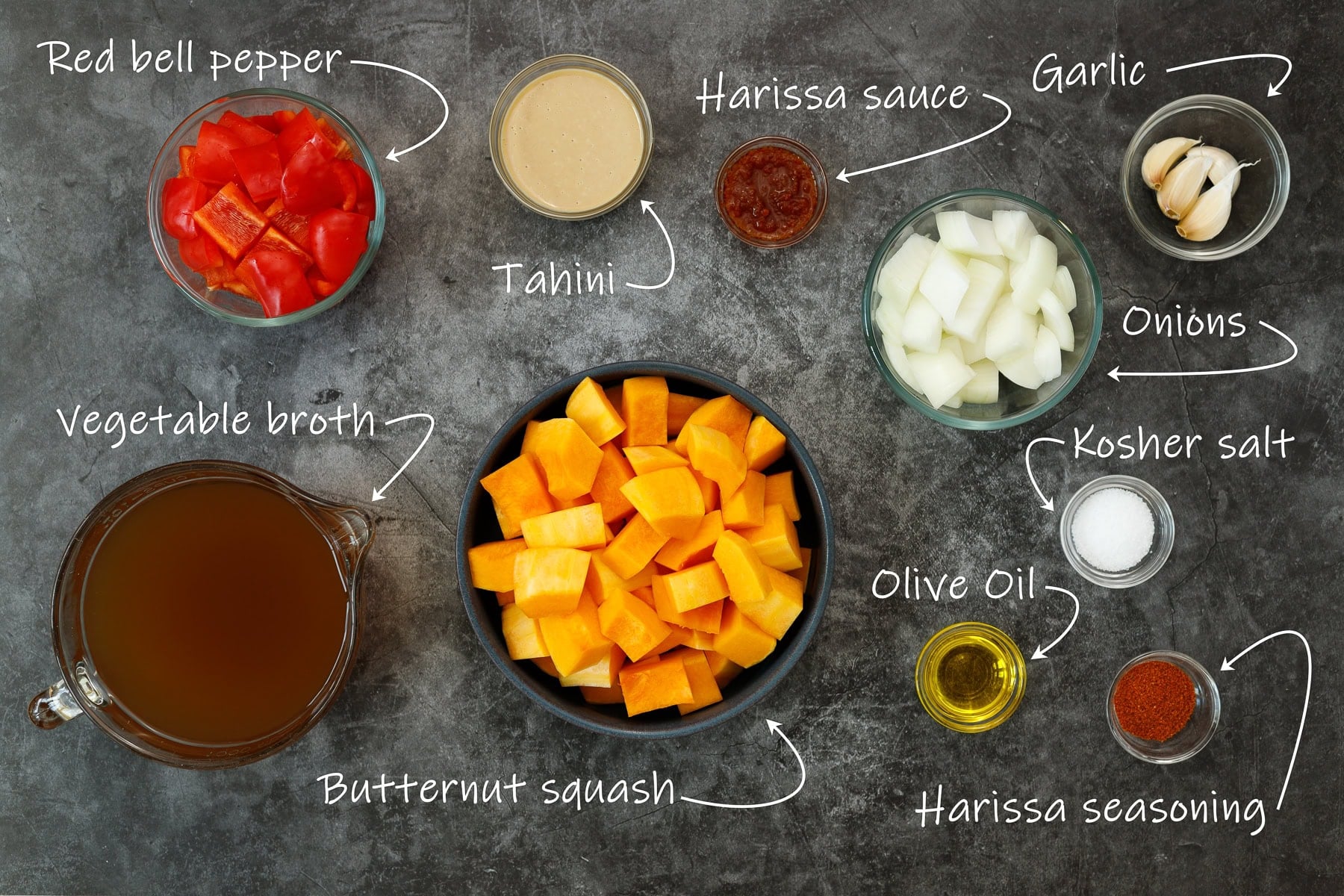
- Butternut squash: try to find one that weighs around 2½ pounds. You can absolutely use pre-cut squash; you'll need 2 to 2½ pounds prepared.
- Harissa seasoning: I love World Market's Harissa spice blend, which is quite mild. Frontier Co-op has a version that is a little spicier, if that's more your speed.
- Harissa paste: The one I see most often in the grocery store is Mina mild harissa paste. I also enjoy Zwita's mild harissa. Note: "Mild," when it comes to harissa, does not mean the paste has no heat. If you need a "zero stars" kind of dinner, this might not be your recipe.
- Tahini: Look for tahini in the international foods section of your local grocery store. It may be with the Indian foods and/or in the kosher section. In larger stores, it is sometimes stocked near the peanut butter. My favorite is Lebanon Valley Tahineh Tahini Extra, which I order from Amazon.
- Onion: yellow or white both work, and red onion can be used in a pinch.
- Garlic: Fresh garlic is the best play here. If it isn't available, add 1 teaspoon of minced dried garlic or garlic powder during the simmering stage.
- Red bell peppers: red peppers have a distinctive flavor when roasted, so yellow or orange bell peppers may disappear in this soup.
- Extra virgin olive oil: I like Cobram Estate 100% California, Classic Flavor, or Pompeian Organic Robust.
- Kosher salt: I test my recipes using Morton's kosher salt. If using table salt, start with half, and add by the pinch to taste at the end.
- Low sodium vegetable broth: I preferred vegetable broth to chicken broth in this recipe as I was testing, but either one works.
More healthy soup recipes from Parsley & Parm
Tips for the best roasted butternut squash soup
Weigh your squash. Squash sizes vary, and a large one can run well over two pounds. Knowing what you actually have tells you how much broth you'll need. I use 4 cups of broth for 2 to 2½ pounds of squash. If you have a smaller squash, start with 3 cups of broth and add extra if needed after blending. For something larger, either save the extra for something else or be sure to have extra broth on hand to adjust the texture of your soup.
Give the vegetables room. Crowding the sheet pan traps steam, and steamed vegetables don't caramelize. If the vegetables and garlic won't fit in a single layer, split everything across two pans. The browning makes a big difference in the flavor of the soup.
Don't skip the simmer. Simmering your roasted vegetables for a few minutes softens the caramelized edges so they blend smoothly into your soup.
Taste before you serve it. Blended soups tend to flatten out flavor-wise; when they taste bland, they are almost always under-seasoned rather than under-flavored. Add the remaining salt a little at a time and adjust to taste at the end.
Make it ahead
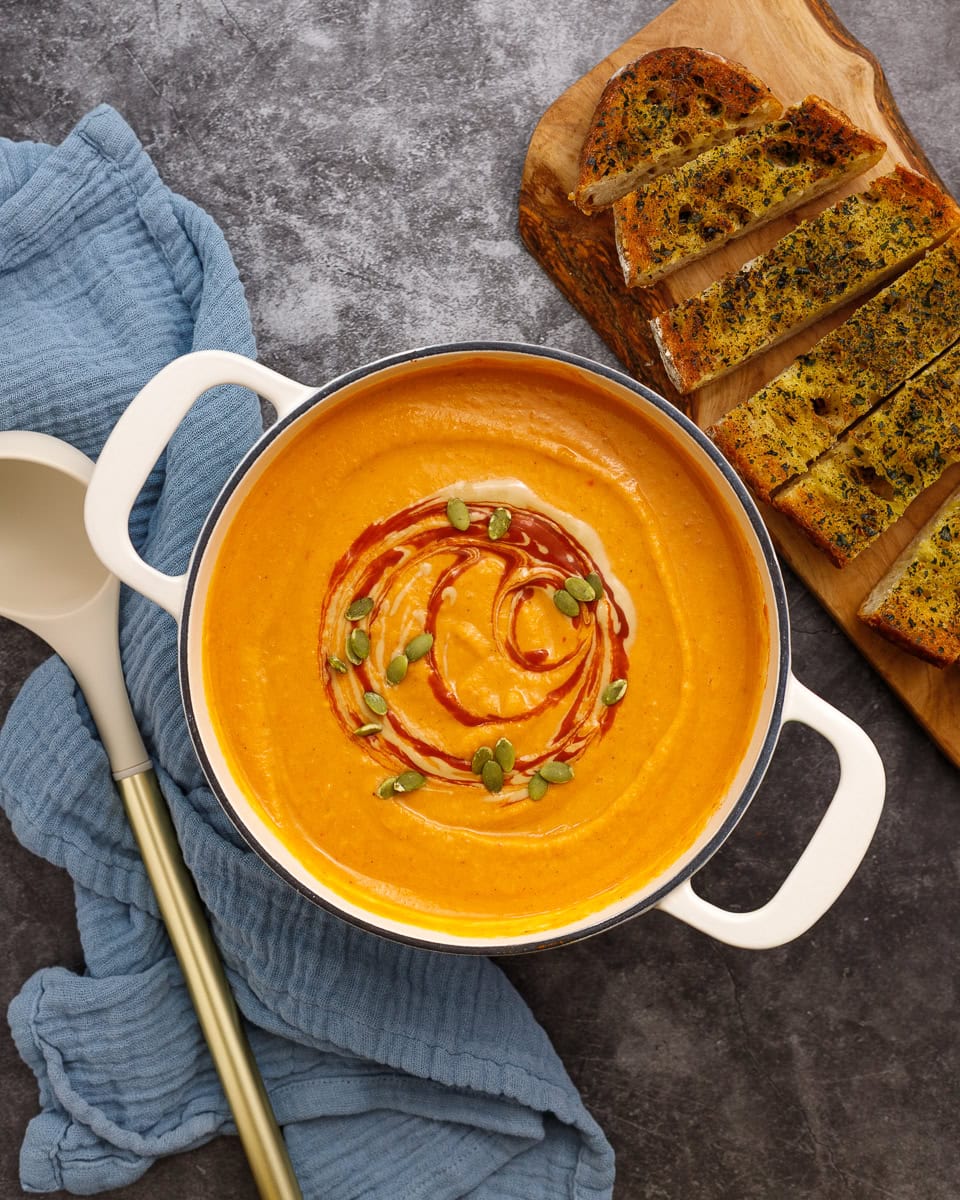
To refrigerate: The soup keeps in an airtight container in the refrigerator for up to four days. Reheat it gently on the stove over medium heat, stirring occasionally, and add a splash of broth if it has thickened.
To freeze: This soup freezes beautifully for up to three months, exactly as made. There's no dairy in it to break or separate, so it comes back the same way it went in. Cool it completely before freezing, and thaw overnight in the refrigerator before reheating.
Did you make this recipe?
If you try this roasted butternut squash and red pepper soup, I'd love to hear what you think! ⭐ Leave a star rating and a review in the recipe card below; it's helpful feedback for me and also for fellow followers and cooks.
For more fresh, Mediterranean-inspired recipes, you can subscribe to my newsletter and follow along on Instagram. You'll also find plenty of recipe inspiration on my Pinterest boards. I'd love to see you there!
And if you're looking for more soup dinner ideas, check out my collection of 20 healthy soup recipes for easy weeknight meals!
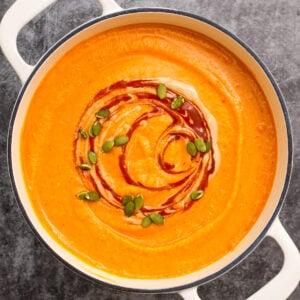
Butternut Squash and Red Pepper Soup with Harissa & Tahini
Special Equipment
- Immersion blender
Ingredients
- 1 medium yellow onion, roughly chopped
- 2 red bell peppers, roughly chopped
- 1 butternut squash (2½-3 pounds) peeled, seeded, and chopped into 1-inch cubes (should yield 2-2½ pounds of chopped squash)
- 2 tablespoons extra virgin olive oil,
- 1½ teaspoons kosher salt, divided
- 2 teaspoons harissa seasoning, (see recipe notes for substitutions)
- 4 cloves fresh garlic,
- 4 cups low-sodium vegetable or chicken broth, plus extra to adjust texture
- ⅓ cup tahini, (see recipe notes for substitutions)
- 1-2 tablespoons harissa paste
- Optional garnish: Tahini drizzle, extra harissa paste, roasted pepitas, chopped parsley
Instructions
- Preheat your oven to 400℉.1 medium yellow onion,, 2 red bell peppers,, 1 butternut squash (2½-3 pounds)
- Line a rimmed sheet pan with parchment or foil, and add the chopped vegetables. Drizzle with the olive oil and sprinkle with ¾ teaspoon kosher salt and the harissa seasoning. Toss everything together until the vegetables are coated. Trim the tops of the unpeeled garlic cloves and add them in the corner of the pan.2 tablespoons extra virgin olive oil,, 1½ teaspoons kosher salt,, 2 teaspoons harissa seasoning,, 4 cloves fresh garlic,
- Roast for 35 minutes, then take the pan out of the oven and remove the garlic cloves and set aside to cool. Toss the vegetables with a spatula and return to the oven for another 15 minutes.
- Scrape the roasted vegetables into a large saucepan or a small soup pot. Squeeze the roasted garlic cloves out of the skins right into the pot.
- Add the broth and ½ teaspoon of kosher salt, and bring to a simmer over medium-high heat. Simmer for 5 minutes.4 cups low-sodium vegetable or chicken broth,
- Turn off the heat and allow the soup to settle for a minute. Add the tahini and harissa paste, and blend well using your immersion blender. Add more broth if needed to adjust the consistency. Taste and add the remaining salt if needed.⅓ cup tahini,, 1-2 tablespoons harissa paste
- Spoon the soup into bowls and drizzle with extra tahini and harissa paste. If your tahini is thick, thin it with a bit of water.Optional garnish: Tahini drizzle, extra harissa paste, roasted pepitas, chopped parsley
Notes
Alternate preparation:
To make this recipe with only harissa paste (not the seasoning blend), mix 2 teaspoons of the paste into the olive oil and toss with the vegetables before roasting. Proceed with the recipe as written.Substitutions:
- For the harissa seasoning: Stir together equal parts of ground cumin, ground coriander, garlic powder, smoked paprika, and ancho chili powder.
- For the tahini: substitute sunflower butter or almond butter.
- For the fresh garlic: substitute 1 teaspoon of garlic powder or minced dried garlic during the simmering phase.
Leftovers:
- Store leftovers in an airtight container in the refrigerator for up to 4 days.
- This soup also freezes well for up to 3 months.
Nutrition*
*All nutritional values are estimates only. They are calculated by an online resource.

Leave a Reply