


This lemon olive oil cake feels like a celebration all by itself-bright, tender, and topped with jammy baked plums. Greek yogurt and good olive oil keep it delectably moist, while fresh lemon adds that sunny Mediterranean vibe we love. If you're craving an easy dessert that tastes as gorgeous as it looks, you've found the one!
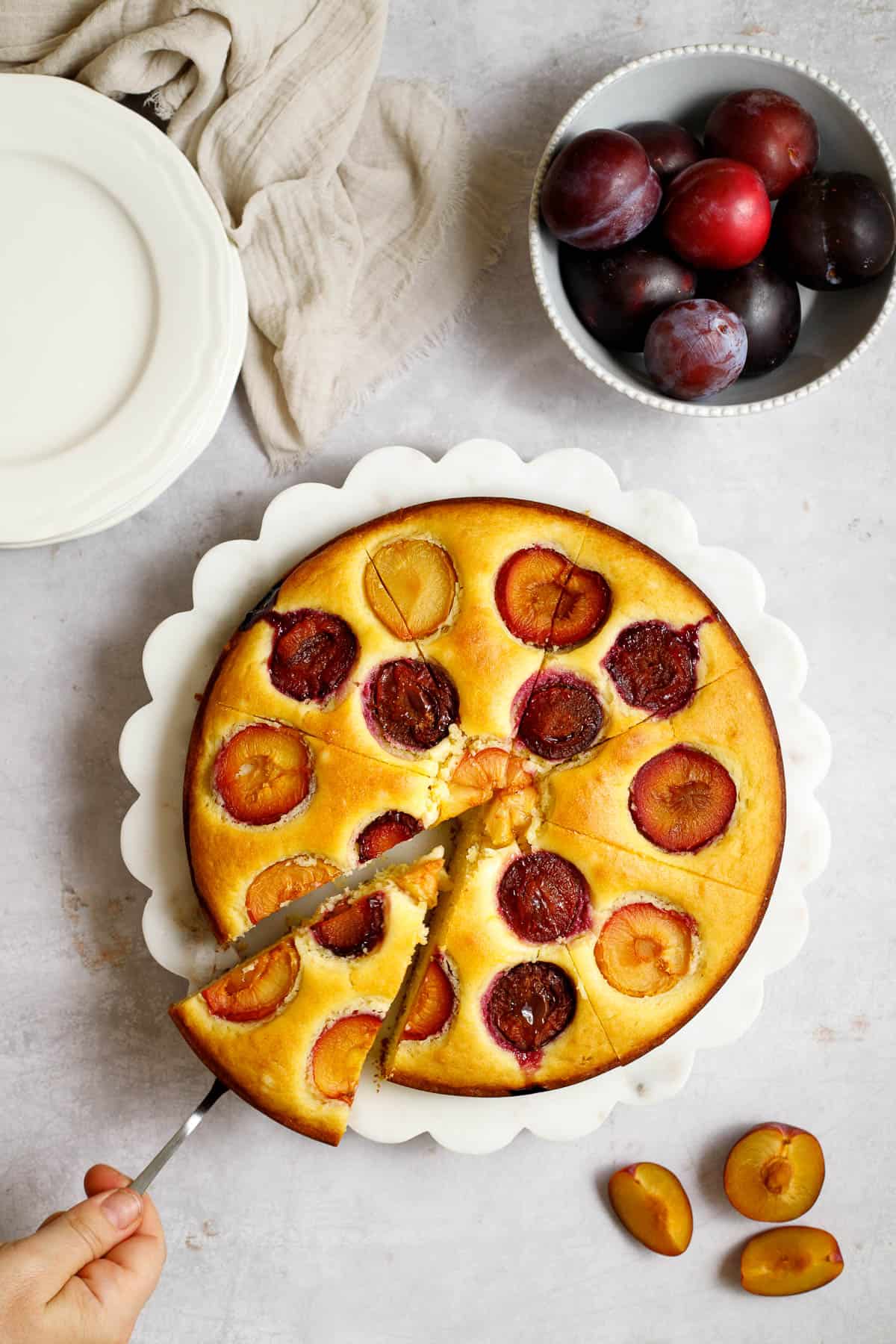
Olive oil and lemon are a classic Mediterranean pairing for good reason-the olive oil softens the lemon's brightness, while the lemon lifts the oil's richness. Olive oil cakes, in general, are wonderfully low-maintenance; with no layers or icing to fuss over, you've got a celebration-worthy dessert for any gathering ready in no time.
Another reason I love olive oil cakes is how beautifully they keep. The olive oil locks in moisture, so the crumb stays tender for days-perfect for make-ahead baking. And because the base is so adaptable, you can top it with whatever tender fruit is in season: plums, apricots, cherries, peaches, or even cranberries. It's a simple, reliable cake that shifts with the seasons and always feels fresh.
What makes this recipe shine ✨
- Quick and easy. You'll only need two bowls-one for the dry ingredients, one for the wet-and the whole cake is in and out of the oven in less than an hour.
- A lighter take on dessert. Still sweet and satisfying, but its richness comes from heart-healthy olive oil instead of butter.
- Elegant and seasonal. A beautiful way to showcase ripe plums and bright citrus-perfect for casual gatherings or special occasions.
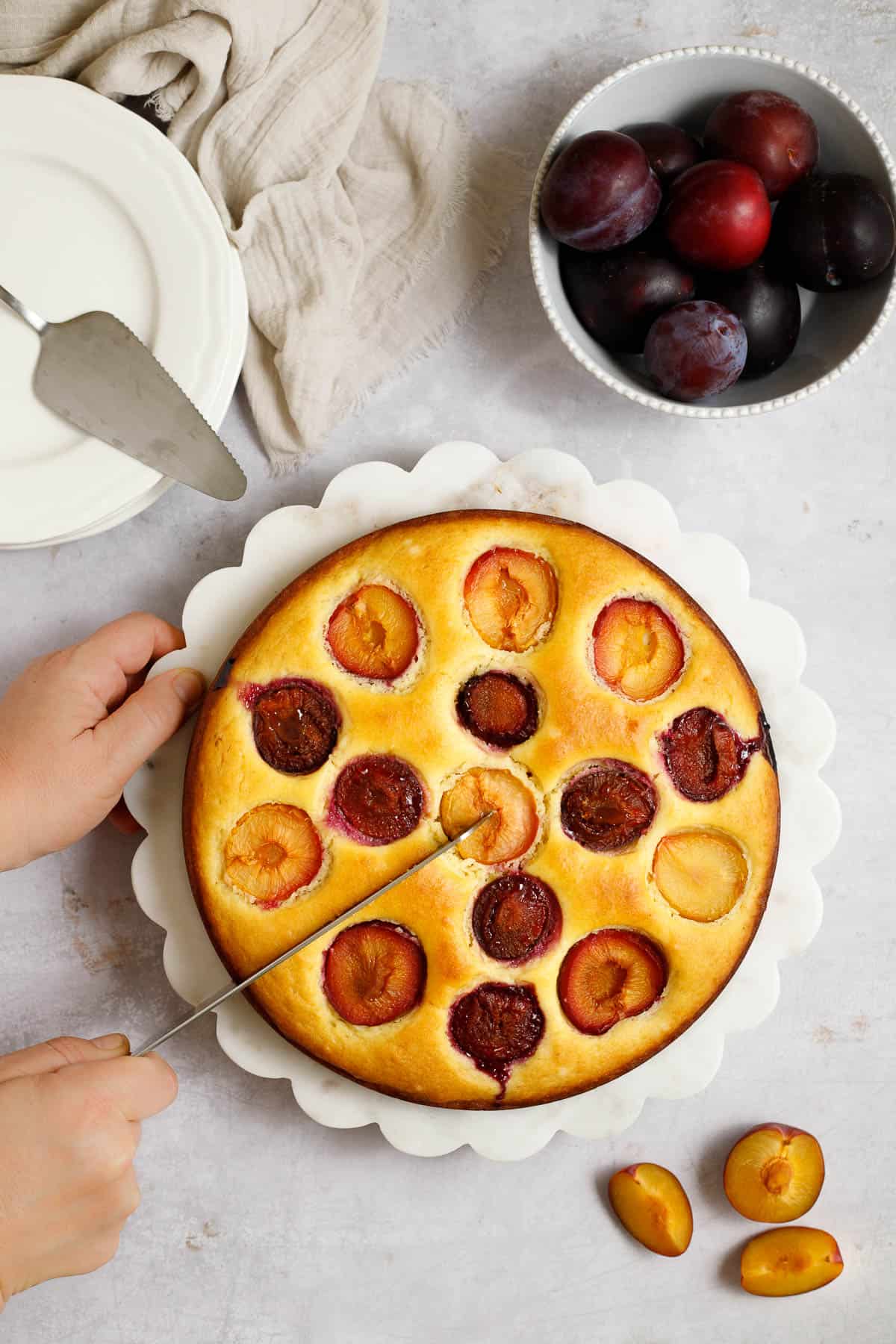
But wait, is olive oil cake actually healthy?
Olive oil cake can be a healthier option than traditional cakes because it uses heart-healthy monounsaturated fats instead of butter, which fits nicely into a Mediterranean-style approach to eating.
It's still a dessert, though, so think of it as a better-for-you treat-not a health food-but one that fits easily into a balanced way of eating.
Ingredient notes
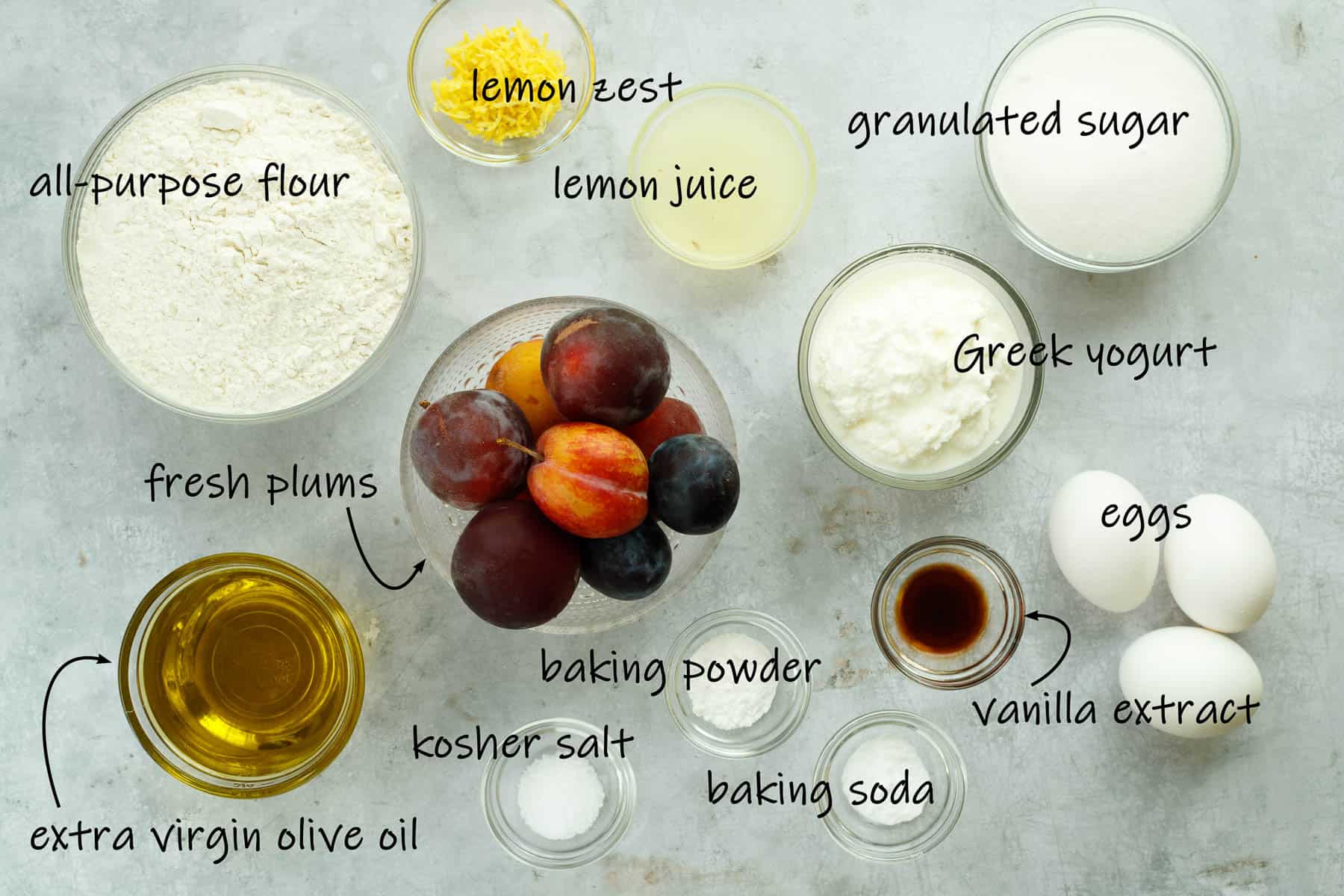
- All-purpose flour - I have not tested this recipe with gluten free flour, but would love to hear how it turns out if you try it. I use Bob's Red Mill Unbleached All-Purpose Flour.
- Granulated sugar - To substitute with stevia, use your product's recommended conversion ratio, then make up the remaining volume with Greek yogurt. Be aware it may change the final texture of your cake.
- Baking soda, baking powder, and salt - Salt is necessary to activate the leaveners in this recipe.
- Lemon juice and zest - Use more lemon zest to add more lemon flavor (the flavor in lemon juice tends to fade during baking).
- Plain Greek yogurt - I use Fage 2% Greek yogurt in this recipe. Nonfat yogurt didn't perform well in multiple tests. For a decadent treat, use full-fat yogurt or even ricotta cheese.
- Extra virgin olive oil - Olive oil-lovers can use a full-flavored olive oil in this recipe, such as Cobram Estate 100% California or, for an even stronger olive oil flavor, Mina Moroccan Extra Virgin Olive Oil. For a subtle flavor, I recommend Pompeian Organic EVOO.
- Vanilla extract - Critical in this recipe to balance the sweetness and the lemon.
- Eggs - For best results, be sure they are room temperature.
- Plums - Not only can you use whatever plums or pluots you wish, but you can also add them in whatever shape you want--halved, chopped, or sliced. I use a mix of black, red, and yellow plums for a gorgeous presentation. This recipe can also be topped with pluots, apricots, cherries, or peaches (but plums are my favorite).
Making lemon olive oil cake: step by step
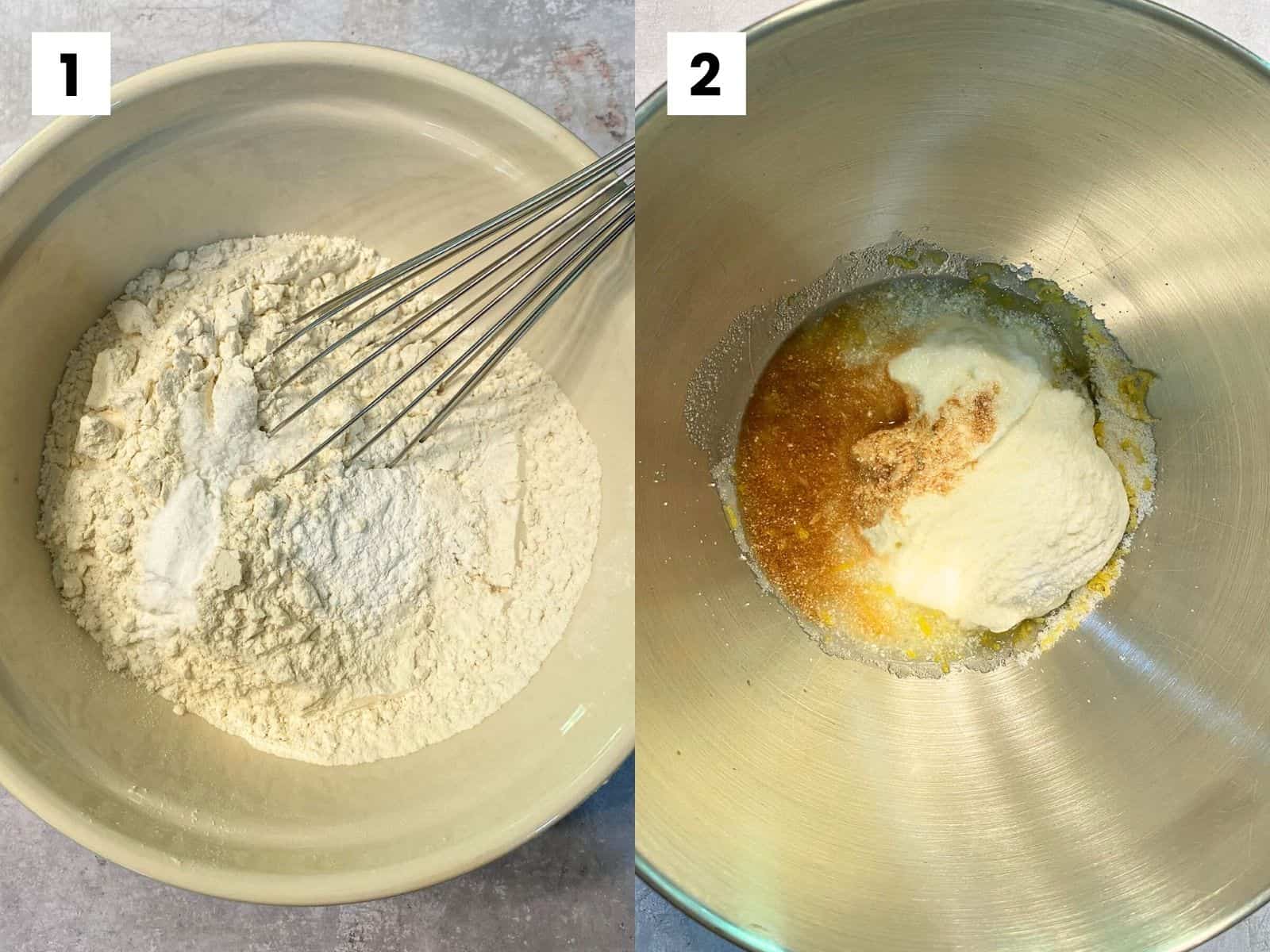
Step 1: Preheat the oven to 350°F and prepare a springform pan. In a medium bowl, whisk together the dry ingredients.
Step 2: Use a stand mixer or hand mixer to combine the wet ingredients, except olive oil.
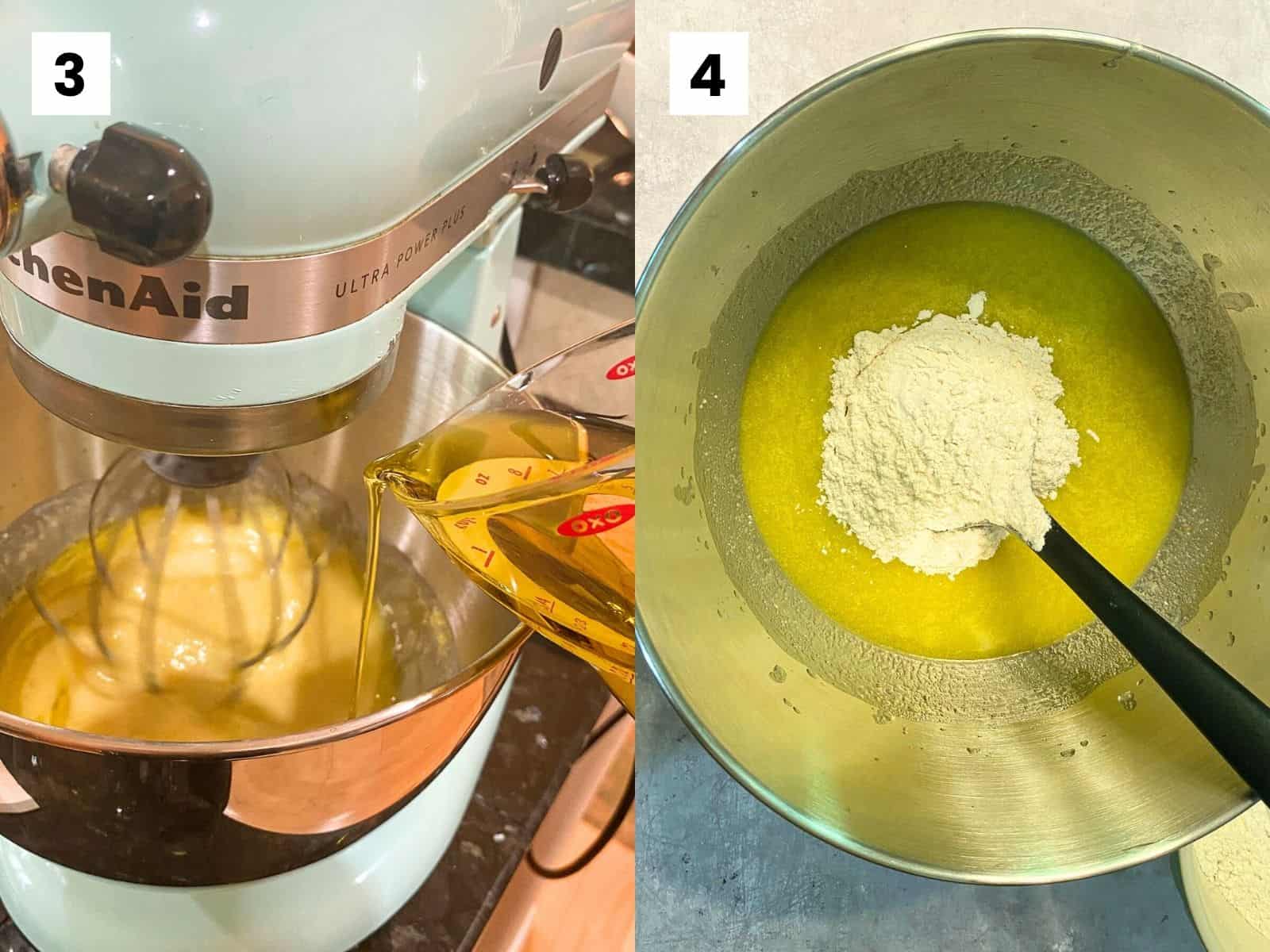
Step 3: With the mixer running on medium, slowly add the olive oil in a thin stream. Continue mixing for 30 more seconds.
Step 4: Slowly add the dry ingredients to the wet ingredients, mixing well with a spatula or spoon.
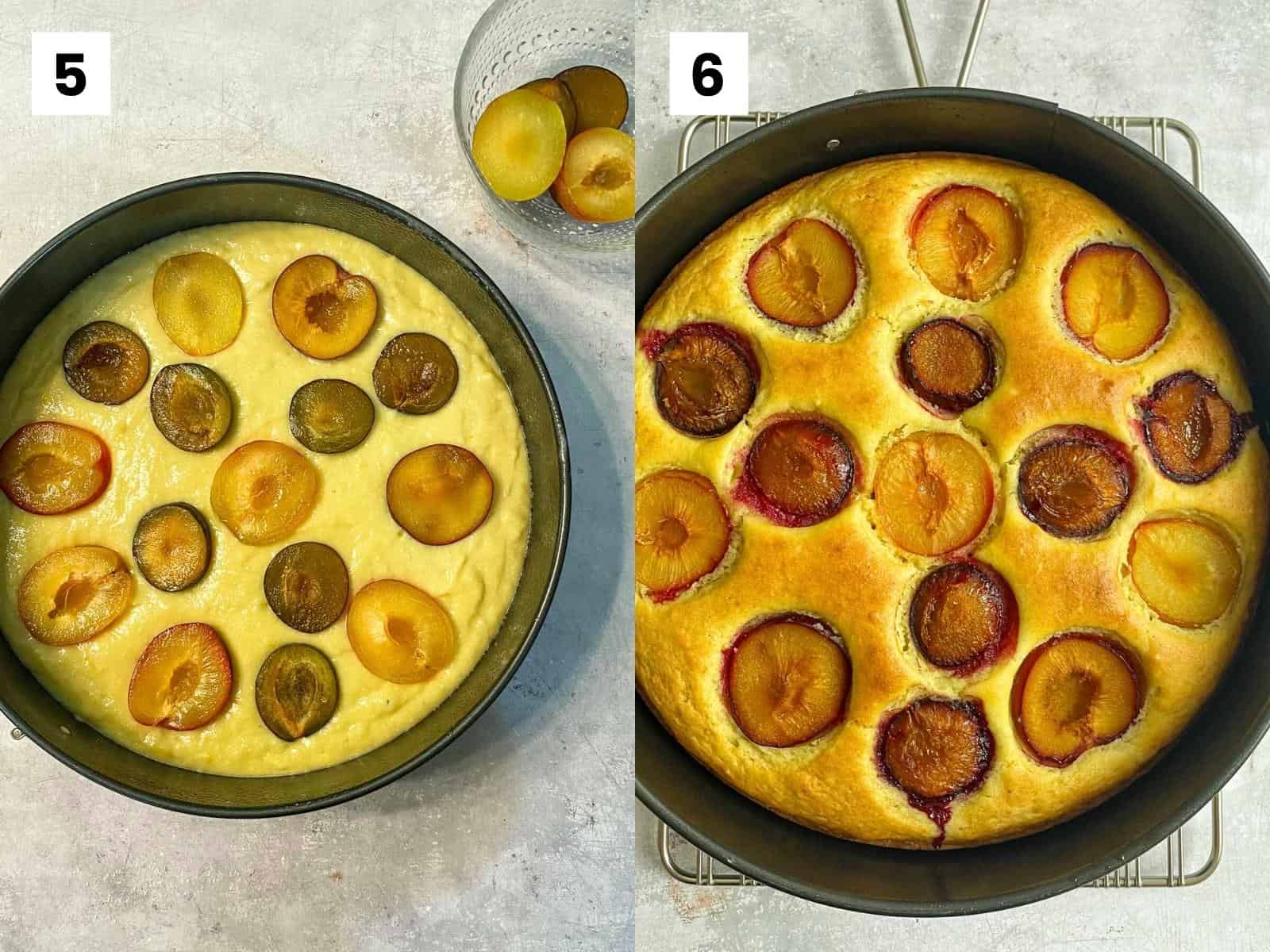
Step 5: Pour the batter into your prepared pan, and top with plums. Bake for 35-40 minutes.
Step 6: Allow the cake to cool for 10 minutes before removing from the springform pan and moving to a cooling rack.
See the recipe card below for full, detailed instructions.
Troubleshooting olive oil cake
Problem: Your cake is too dense.
An olive oil cake usually turns dense from overmixing after the flour goes in, which develops gluten. Gently fold the dry ingredients in with a spatula instead of the mixer, and watch your measurements-too much lemon juice, yogurt, or olive oil can make the cake heavy.
Problem: Your cake tastes bitter.
Rancid olive oil can make your cake taste bitter, so give your EVOO a quick sniff if it's been sitting around. Light and heat speed up rancidity, so keep your olive oil in a dark container stored somewhere cool and out of direct light.
Problem: Your olive oil cake has a sunken center.
A sunken center can happen if the cake is underbaked, the batter is too wet, or there's too much leavening. Try not to open the oven during the first 30 minutes of baking, since that drop in temperature can disrupt your cake's rise. And be sure to measure accurately so the wet-to-dry ratio stays on track.
Problem: Your cake is oily or overly moist.
The best way to avoid this is by letting the cake cool completely before cutting it. This allows the crumb to set and the olive oil to be absorbed into the cake.

Storing leftover cake
Because this cake has plums baked into the top, it's best to store it in the refrigerator after the first day. Let the cake cool completely, then cover it tightly with plastic wrap or place it in an airtight container. It will keep for about 3 to 4 days. When you're ready for a slice, let it sit at room temperature for 20 to 30 minutes so the crumb softens and the flavors come back to life.
Did you make this recipe?
If you try this olive oil cake recipe, I'd love to hear what you think! ⭐ Leave a star rating and a review in the recipe card below-it's helpful feedback for me and also for fellow followers and cooks.
For more fresh, Mediterranean-inspired recipes, you can subscribe to my newsletter and follow along on Instagram. You'll also find plenty of recipe inspiration on my Pinterest boards and daily favorites on Facebook. I'd love to see you there!
More Olive Oil Cakes from Parsley & Parm




Lemon Olive Oil Cake with Plums
Special Equipment
- Stand mixer or hand mixer
Ingredients
- 2 ½ cups all-purpose flour
- ¾ cup granulated sugar
- 1 teaspoon baking powder
- ½ teaspoon baking soda
- ½ teaspoon kosher salt
- 1 large lemon zested and juiced
- ¾ cup Greek yogurt preferably 2% (see notes)
- ¾ cup extra virgin olive oil
- ½ teaspoon vanilla extract
- 3 large eggs
- 10 small plums (about ½-¾ pound) pitted and halved, chopped, or sliced (see notes)
Instructions
- Preheat the oven to 350°F. Line an 8- or 9-inch spring form pan with parchment paper and brush the sides with olive oil.
- Combine the all-purpose flour, baking powder, baking soda, and salt in a bowl. Whisk together and set aside.
- In the bowl of a stand mixer fitted with a whisk attachment, whisk the sugar, 2 teaspoons of lemon zest, Greek yogurt, vanilla, and eggs on low speed until combined. Turn the mixer speed up to medium and add 2 tablespoons of lemon juice, then pour in the olive oil in a slow stream. Continue whisking for 30 more seconds, then turn off the mixer and remove the bowl from the mixer stand.
- Using a spatula, fold in the dry ingredients ½ cup or so at a time. Fold gently to avoid developing gluten in your cake batter. Stop when the ingredients are fully incorporated.
- Pour the batter into your prepared cake pan. Top with the plums and place the cake directly in the oven.
- Bake for 35-40 minutes, or until a toothpick inserted in the center comes out clean. Note: If using a 9-inch pan, check your cake at 30 minutes. Do not open the oven door before 30 minutes has passed.IMPORTANT: Cooking time may vary depending on the moisture content of your yogurt. I used Fage 2% Plain Greek Yogurt to test this recipe. If your yogurt has a higher moisture content, it may take longer to bake.
- Allow to cool for 10 minutes before removing the ring from the springform pan and transferring the cake to a wire rack. Cool on the rack for at least 30 minutes.
Notes
- I tested this cake with multiple brands of yogurt. I had the best outcome with Fage 2% Plain Greek Yogurt. Fat-free yogurt did not perform well in any of my tests.
- To adjust the lemon flavor in this cake, use more or less lemon zest.
- Cut the plums however you would like; in half, in quarters, or even slices. I recommend cutting larger plums into smaller pieces rather than leaving them in halves.
- My favorite olive oils for this cake are Cobram Estate 100% California, Classic Flavor, or Pompeian Organic Robust EVOO.
- Ricotta cheese is absolutely delicious in place of the Greek yogurt in this recipe. It will raise the fat content considerably, but it's a great way to fancy this cake up for a truly special occasion.
- Orange juice and zest can be substituted for lemon.
- This cake will stay moist for 4-5 days, but the fruit on top is prone to mold. Refrigerate your cake, covered, to keep it fresh, but bring it to room temperature before serving.
- This cake can also be frozen for up to a month, wrapped in double layers of plastic wrap plus a layer of aluminum foil.
Nutrition*
*All nutritional values are estimates only. They are calculated by an online resource.
Leave a Reply